
Legal Expertise
Traffic Offence Lawyers in Melbourne
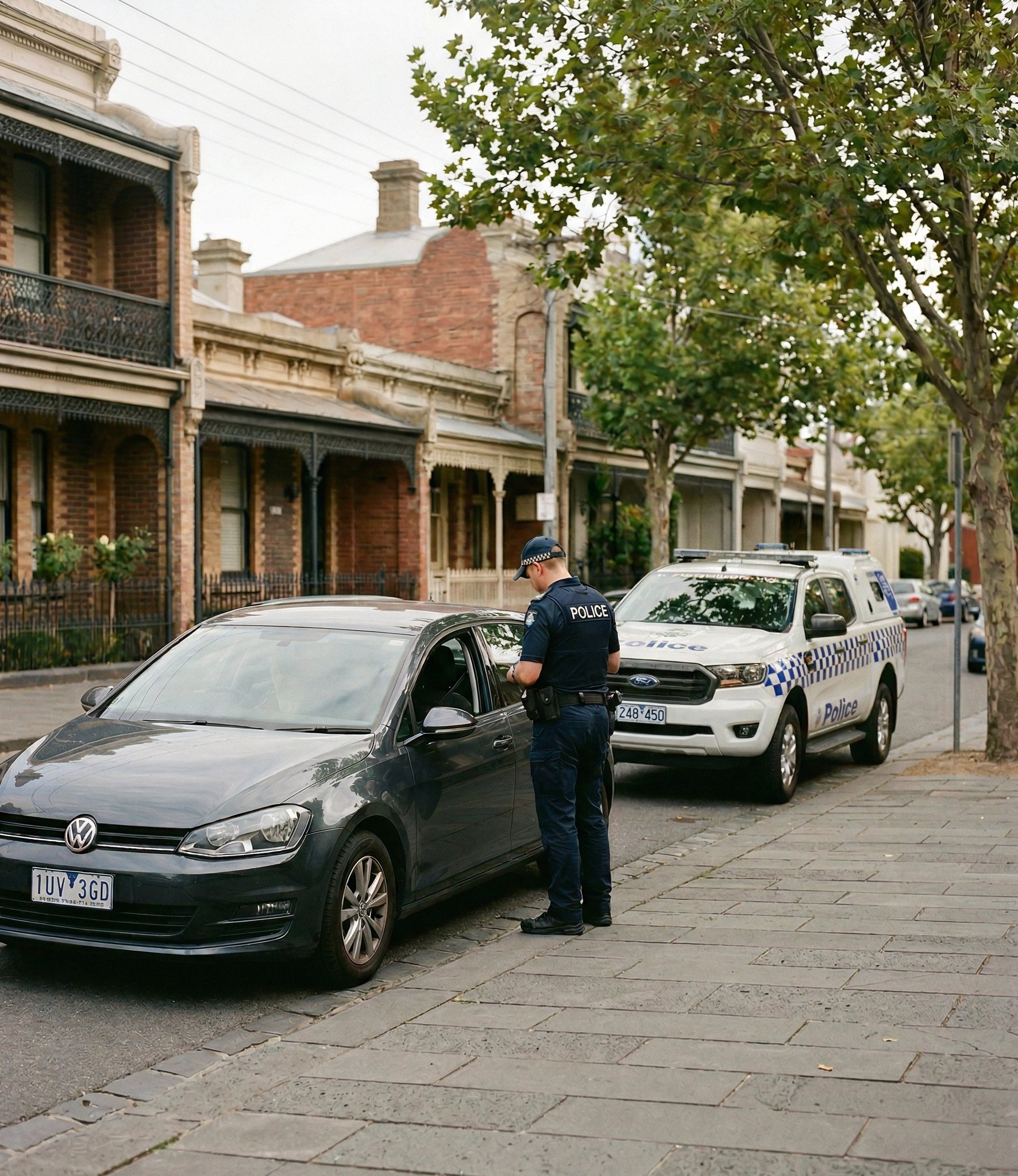
Expert Traffic Lawyers in Melbourne
Traffic offences cover a broad range of charges – from minor infringements such as careless driving and low-level drink-driving, to serious offences under the Crimes Act such as culpable driving causing death and dangerous driving causing death or serious injury. Whatever you are facing, engaging expert legal advice at the earliest opportunity is essential.
A traffic offence will often require close technical analysis by your legal representatives and other experts engaged by our firm. Our team is best placed to advance all available defences on your behalf in this complex field of criminal law.
Slades & Parsons is a Melbourne CBD-based law firm with more than 35 years of experience defending criminal charges. Contact us on (03) 9602 3000 – we are available to take your call 24 hours a day.
Dangerous Driving Causing Serious Injury
More serious traffic offences such as dangerous driving causing serious injury demand careful forensic scrutiny from the outset. Individuals facing offences such as this face lengthy terms of imprisonment if convicted.
Traffic offences span from road safety offences and minor matters to offences that contravene the Crimes Act – including reckless conduct endangering serious injury, reckless conduct endangering life, dangerous driving causing serious injury or death, and culpable driving.
Offences that automatically go to court include driving under the influence of alcohol or drugs, driving whilst disqualified or suspended, speeding significantly over the limit, and failure to stop. Offences resulting in serious injury or death are heard in the higher courts.
Many offences under the Road Safety Act attract mandatory licence loss or terms of imprisonment. Victoria Legal Aid does not fund representation for Road Safety Act offences – making early engagement of private legal representation particularly important.
Drink and Drug Driving Offences
Drink and drug driving offences carry subtle but significant technical variations. Charges include driving whilst exceeding the prescribed concentration of alcohol, driving under the influence of alcohol, driving whilst impaired by drugs, and refusing to undergo a preliminary breath test or drug impairment test.
The distinctions between charges matter. Driving under the influence of alcohol is a more serious offence than exceeding the prescribed concentration. Driving whilst impaired by a drug is more serious than exceeding a prescribed drug concentration – and to prove impairment, police must have conducted a formal impairment assessment.
These technical differences can make all the difference to your outcome. A successfully run technical defence can spare you significant penalties, including imprisonment and long-term licence disqualification. Our team carefully examines all procedural steps taken by police and identifies every available argument on your behalf.
Melbourne Criminal Defence Lawyers - 35 Years of Results
Slades & Parsons recently represented a truck driver charged with dangerous driving causing serious injury following a freeway collision during stop-start traffic. It was alleged he failed to notice traffic had stopped, had not braked prior to the collision, and may have been distracted by a phone call moments before impact.
Working with an experienced barrister, our team challenged the call charge records – successfully arguing that receiving a call did not establish the driver had answered it or been distracted. Under cross-examination, the eyewitness conceded the driver’s movements were equally consistent with checking a mirror or changing lanes. The remaining evidence was insufficient to commit our client to trial.
It was accepted that his conduct amounted only to the summary offence of careless driving, to which he pleaded guilty. He received a modest financial penalty and avoided a lengthy term of imprisonment.
Traffic Offence Legal Advice
If you are facing a traffic charge, do not wait. A traffic offence will often require close technical analysis – and the earlier your legal team is engaged, the better placed they are to scrutinise the prosecution’s case and advance every available defence.
Our team works with other experts where required and is experienced across the full spectrum of traffic charges, from infringement matters through to dangerous driving and culpable driving cases. Traffic law also extends to newer offences such as exposing emergency workers to danger by driving.
Slades & Parsons are available to take your call 24 hours a day. We can provide more information on defending traffic charges and help you navigate the legal process from start to finish.
FAQs
-
Traffic laws are in place to ensure the safety of road users and pedestrians. If you contravene a traffic law this is a traffic offence.
Traffic offences are a complex area of law in Victoria, as the offences can be very serious and have significant penalties. Many offences are enforced through a driver having the onus to disprove allegations. For example, the owner of a motor vehicle may have an obligation to nominate a driver.
Traffic offences can include:
- Traffic collisions
- Speeding
- Driving in a manner that has caused serious injury or death to another person
- Infringement enforcement orders that may have accumulated significant penalties
-
Traffic offences span from road safety offences and minor traffic offences to offences that contravene the Crimes Act. They include reckless conduct endangering serious injury, reckless conduct endangering life, dangerous driving causing serious injury or death and culpable driving.
Some minor traffic offences may include speeding slightly over the limit or using a mobile phone whilst driving. These offences are ordinarily not heard in Court but people can elect to do so if they are challenging the penalty.
Offences that automatically go to court and are considered as serious include:
- Driving under the influence of alcohol or drugs
- Driving whilst disqualified
- Driving whilst suspended
- Speeding in a level that is significantly over the limit
- Failure to stop
Traffic offences heard in the higher courts include offences that have resulted in the serious injury or death of another person.
-
All traffic matters can be heard in a court if a person elects to do so. If you choose to go to court, we always recommend securing court representation on all legal matters.
Ordinarily, not all traffic offences go to court. However, there are many offences under the Road Safety Act that attract terms of imprisonment or mandatory loss of licence. These matters are heard in court before a Magistrate, at the Magistrates Court.
Victoria Legal Aid does not fund legal representation for any offences under the Road Safety Act. However, many Road Safety Act offences can attract terms of imprisonment or mandatory licence loss. The Court considers those to have a poor driving history as serious matters. For these people, the Court can impose substantial fines, Community Correction Orders or imprisonment.
-
All offences under the Crimes Act (for example, dangerous driving causing serious injury) will be disclosed on your criminal record. Further, there are many offences that can be disclosed on your Criminal History that are lower-level offences. This includes driving while disqualified or driving carelessly.
Further, if your matter is heard in Court then it will be disclosed on your Criminal Record. This is important if you have elected to have your case heard in court. For an offence that is not ordinarily heard in court, a guilty finding will appear on your record.
Further, there is a driving record that is a separate criminal history. The offences that are recorded on your prior traffic history include:
- Offences that attract demerit point loss
- Driving offences where you were found guilty by a court
- Offences that have resulted in a loss of licence that may not have been heard before a court. For example, driving with alcohol in your system or speeding
- Traffic camera offences
- Failure to stop (at the scene of a collision or on direction from a police officer)
Criminal and traffic priors can be disclosed in criminal record checks by employers to potential employees.
-
Many offences attract mandatory license loss and judicial officers have the discretion to disqualify or cancel licenses.
VicRoads ordinarily manages the relicensing requirements. Anyone with a suspended, disqualified or cancelled licence must attend VicRoads to be advised of their requirements to be re-licensed.
For those who have had their licence suspended due to alcohol or drug use, there are obligations to complete courses. They then make an application to the court, before a Magistrate, to obtain a licence. This may also include a period of an alcohol interlock.
Further, some people may complete the suspension period but then have demerit point loss of licence come into force. Therefore, it is essential that enquiries are made with VicRoads prior to driving.
-
The penalties vary depending on the reading on your prior driving history and when the offending occurred. If you have relevant prior offences, the mandatory loss periods increase.
Currently, the mandatory minimum licence disqualification for a reading above 0.05 but less than 0.07 is 6 months for a first offence or 12 months for a subsequent offence.
Any subsequent offending within a ten-year limit will have that figure at least doubled.
Higher readings also result in further mandatory licence disqualification limits.
Further, if the reading is BAC 0.10 or more your car can be impounded.
The Magistrate can extend the disqualification period if the driving behaviour was also dangerous.
Once the period of disqualification has elapsed, VicRoads will advise drivers of any further steps or courses they must complete. This includes attending Court and making an application for an alcohol interlock.
-
Minor traffic offences are dealt with by way of an immediate fine. They are served on people either directly by a police officer or in the mail. Minor traffic offences may include:
- Traffic camera offences
- Driving whilst using a hand-held telephone
- Driving without a seat belt
- Using a push bike without a helmet
If a matter is being heard in Court, it is not considered to be a minor offence. This is especially in circumstances of driving in breach of court orders.
It is important to consider that unpaid fines for minor offences can accumulate and receive further penalties. CityLink fines are an example of this. People may have accumulated fines to the value of thousands of dollars and have their matters listed before the Infringement Court.
To find out whether fines have lapsed and are in the Infringement Court, contact should be made to Fines Victoria. If the fines have reached a high value, contact a legal representative to consider options. This is important as some infringement matters can result in terms of imprisonment for otherwise minor offences.
Chat To Our Team of Experts
Melbourne Office
Level 1,
224 Queen St,
Melbourne,
Victoria, 3000
Trending Insights To Be In The Loop




Awards and Recognition
-

Best Criminal Lawyers Melbourne 2025
-

Leading Defence Lawyers Victoria
-

Leading Defence Law Firms Victoria
-

Leading Defence Lawyers Australia
-
Doyles Guide Rising Stars: Savannah Westwood featured
-

The 12 Best Criminal Lawyers In Melbourne
-

The Best Criminal Lawyers in Melbourne
-

The 8 Best Criminal Lawyers in Melbourne