
Legal Expertise
Police Interview Lawyer Melbourne
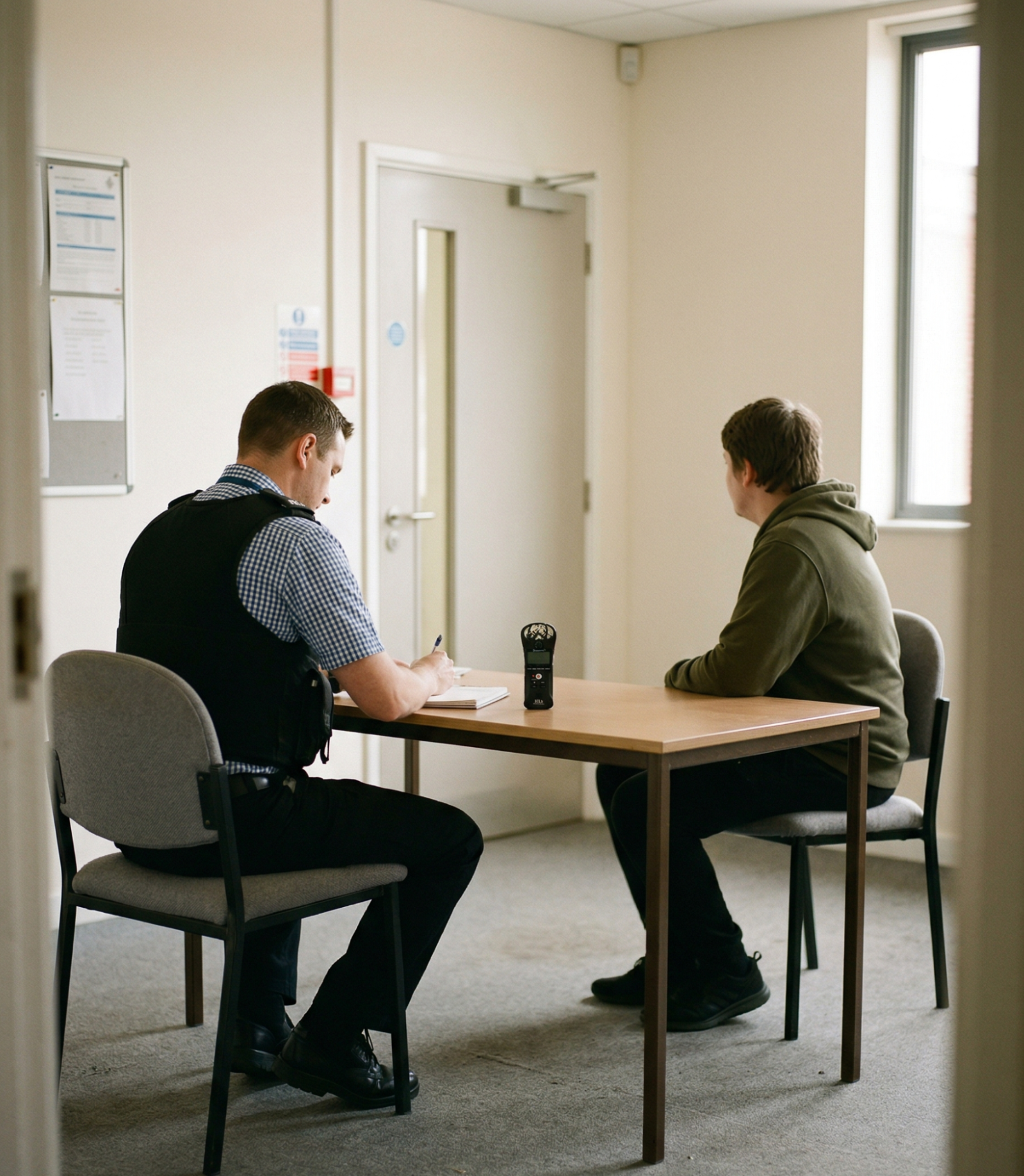
Understanding Records of Interview
What you say in a police interview can determine whether you are charged, released, or later prosecuted. A record of interview is one of the most critical stages of a criminal investigation – anything you say can be used as evidence in court.
At Slades & Parsons, our Melbourne-based lawyers provide urgent and practical advice before you speak to the police. With decades of experience across indictable offences including theft, assault, fraud, sexual offences, and culpable driving, we ensure you understand your rights and are prepared to protect yourself.
Do not go into a police interview unprepared. Call us on (03) 9602 3000 before attending – early advice can make the difference between being charged or released.
Your Rights in a Police Interview
You have important legal rights designed to protect you in a record of interview. These include the right to contact a lawyer before answering any questions, and the right to silence – you are not required to answer questions beyond confirming your name and address. You may choose to provide a “no comment” interview.
If your English is limited, you are entitled to an interpreter. If you are under 18, a parent, guardian, or independent adult must be present. If you have a cognitive or mental disability, an independent third person must attend.
Police must inform you of the allegations in sufficient detail before questioning begins. However, they are not required to disclose all evidence they hold – such as witness statements or forensic material. This is precisely why obtaining legal advice before any interview is essential.
How Slades & Parsons Can Help
Deciding how to approach a police interview – whether to give a “no comment” interview, make limited admissions, or answer questions in detail – is a strategic decision that should only be made with legal advice. Our team of Melbourne police interview lawyers provide:
- Immediate advice before you attend a record of interview.
- Clear guidance on whether to answer questions or remain silent.
- Court-ready defence strategies if charges follow.
- Representation under Victoria Legal Aid where eligible.
In sensitive matters such as sexual offences or family violence offences, having a lawyer advise you beforehand can make a decisive difference to the outcome of your case. Even if you intend to make admissions, obtaining advice remains crucial to ensure your position is properly protected. We draw on decades of criminal law expertise to protect your rights from the very first interaction with police.
Why Legal Advice Before a Record of Interview Matters
A record of interview is not simply a formality – it is the stage at which a criminal investigation can be won or lost. Police will have prepared a line of questioning in advance. They are not obliged to reveal the evidence they hold. Answers you give can be used against you in court.
A lawyer, contacted before the interview, will ask police questions about the offending and the evidence they have before advising you on how to respond. This intelligence shapes the entire advice you receive.
Being interviewed does not always mean you will be arrested – the outcome can range from release without charge to being placed on bail or summonsed to court. In serious matters, how you respond will heavily influence whether charges proceed. Obtaining legal advice is the single most important step you can take before walking into an interview.
The Police Interview Procedure
The standard police interview process involves a caution – police must explain your rights before questioning – identification of your name and address, questioning, and recording. Interviews for indictable offences are usually electronically recorded and later used in court.
After the interview, police may release you without charge, release you and charge you at a later stage, require you to appear in court within 14 days, charge you and release you on bail, or charge you and keep you in custody. Recent Bail Act changes have resulted in many criminal charges resulting in police remand applications.
If police have contacted you or asked you to attend a record of interview, contact Slades & Parsons immediately. We are available to take your call 24 hours a day and will provide confidential, practical advice before you face police questioning.
FAQs
-
A Record of Interview forms part of a criminal investigation, where the police officer puts the allegations to the person accused of an offence. It is a requirement of all criminal investigations that a person who may be accused or charged with an offence has an opportunity to answer the allegations.
The Record of Interview is also an opportunity for the accused person to give their side of the allegations, to deny the allegations or to admit guilt of offending. A Record of Interview can be considered to be a statement to police from the accused person.
There is no obligation on persons being interviewed to answer the questions, and all persons have the right to give a “no comment” interview. It is very important for anyone who is to be interviewed to request to have legal advice prior to the interview.
-
A Record of Interview forms part of a criminal investigation and people may be released without being charged. However, this does not mean that the police will not charge an accused person at a later stage.
Police members can charge people by way of a ‘summons’ to attend Court if they had not charged at the time of the interview. Alternatively, they can arrange a time for you to attend the police station to be placed on bail.
Legal representatives ask police questions prior to giving legal advice. It may be that the police officer will advise the legal representative that they will be charging the accused person. This assists with legal representatives giving people advice regarding answering questions.
Recent Bail Act changes have resulted in many criminal charges resulting in police remand applications.
-
Interpreters can be organised by Victoria Police to assist a person in a record of interview. However, there are some driving offences where interpreters do not need to be arranged (driving under the influence of drugs or alcohol).
Interpreters are paid for by Victoria Police and are registered and trained to translate during interviews.
There are interpreters available for many different languages and dialects. If an appropriate interpreter is not available, then the information you give to a police officer may be excluded in court.
-
Minors are able to be interviewed by police either as an accused or as a witness.
Any person under the age of 18 years must have either a parent, guardian or an independent person with them during a Record of Interview.
If a parent, guardian or independent person has not been arranged then the interview cannot be used as evidence. An independent person is arranged by police and is there to make sure minors understand their rights.
The only time that the police do not have to wait for a support person, is when they believe that someone may be in danger.
If a minor makes a statement to police as a witness, their statement can be by way of video rather than a written statement.
-
The length of a record of interview largely depends on the complexity of the investigation. It also depends on whether a person will elect to answer the questions or to give a “no comment” interview.
A “no comment” interview ordinarily takes half an hour or less, as the questions police ask are limited by the refusal to answer questions.
If a person elects to answer a record of interview and the offences are serious, the record of interview may go for several hours. It depends on the number of questions being asked by police.
Prior to a record of interview for serious offences, police will have a pre-determined line of questioning. These questions can be increased depending on the answers of the person being interviewed.
-
It is possible to be charged without a police interview in some circumstances. Examples include when the person waives their right for interview in custody, or when the person is deemed unfit for interview by an independent expert (due to mental illness or intoxication). Advice should always be sought in advance of any proposed process of arrest or interview by police.
-
Police have the power to arrest people for the purpose of a Record of Interview.
Following an arrest, you can elect to give a “no comment” interview whereby you refuse to answer the questions of the police member interviewing you. The only answers you must give are your name and address, otherwise, you have the right to silence.
On some occasions, you may be given the option to waive your right to an interview. This can occur if the accused person is in custody and has sought legal advice. This information is then communicated to police via the accused’s legal representative.
-
Police may give small detail regarding why they are interviewing you. However, they do not have to give you all the information they have before the interview takes place.
For example, the police may advise you that you are being interviewed for a shop theft. But they may not advise you until the end of the interview that they have CCTV video footage of the shop theft. This is a commonly used interview tactic by police as answers given in a record of interview can be used as evidence.
This is why it is important for all people to exercise their rights to contact a legal representative prior to the interview. A lawyer will ask a series of questions to a police officer regarding the offending and the evidence they have prior to giving interview advice.
Chat To Our Team of Experts
Melbourne Office
Level 1,
224 Queen St,
Melbourne,
Victoria, 3000
Trending Insights To Be In The Loop



Awards and Recognition
-

Best Criminal Lawyers Melbourne 2025
-

Leading Defence Lawyers Victoria
-

Leading Defence Law Firms Victoria
-

Leading Defence Lawyers Australia
-
Doyles Guide Rising Stars: Savannah Westwood featured
-

The 12 Best Criminal Lawyers In Melbourne
-

The Best Criminal Lawyers in Melbourne
-

The 8 Best Criminal Lawyers in Melbourne